How to apply a product, in what order, and at what time of day. Three routines explained simply, with the products that go with them.
5 steps
Five steps, thinnest to richest. The order matters more than the number of products: a cream applied before a serum stops the serum doing its job.
3 steps
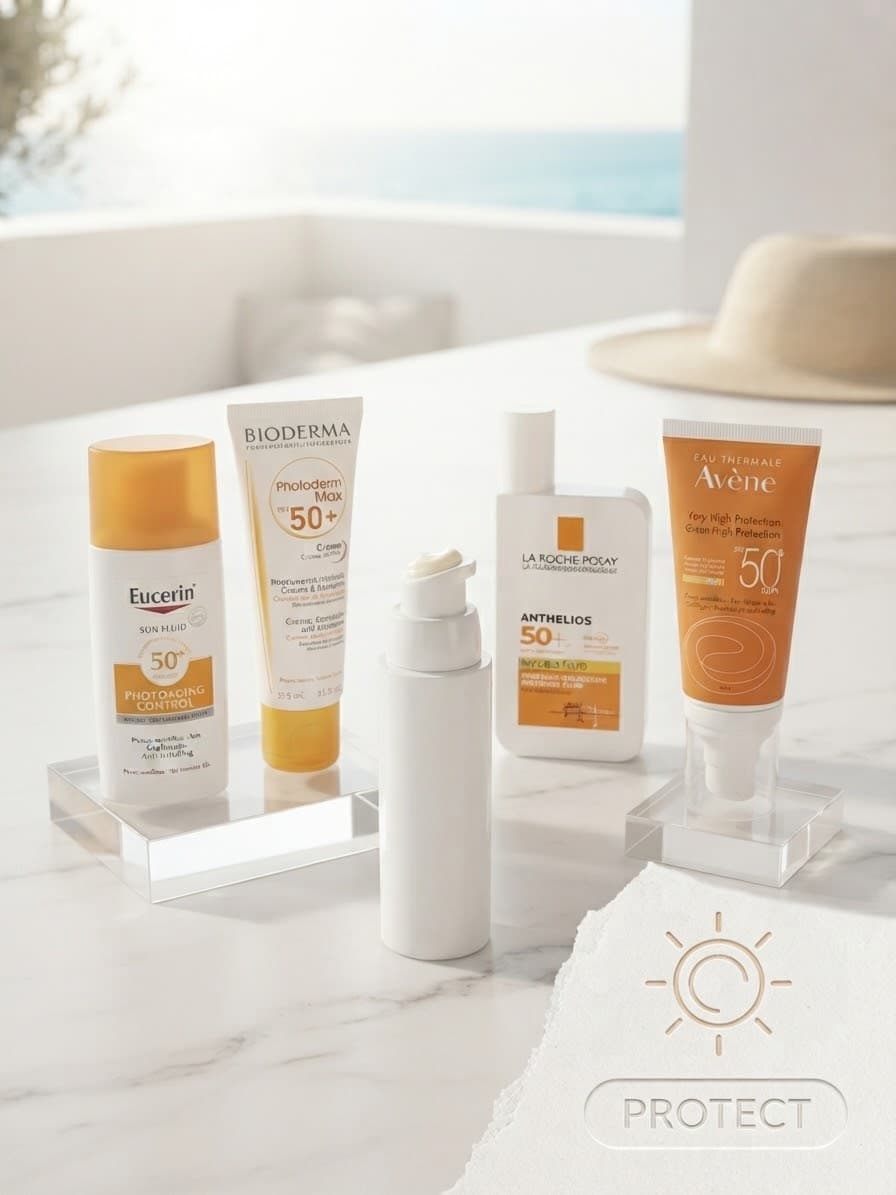
Most sunscreen is used badly rather than chosen badly: too little product, one application, and an SPF 50 ends up protecting like an SPF 15.
4 steps
An infant's skin is thinner and loses water faster than ours. The whole point is to wash little, dry gently, and moisturise quickly.
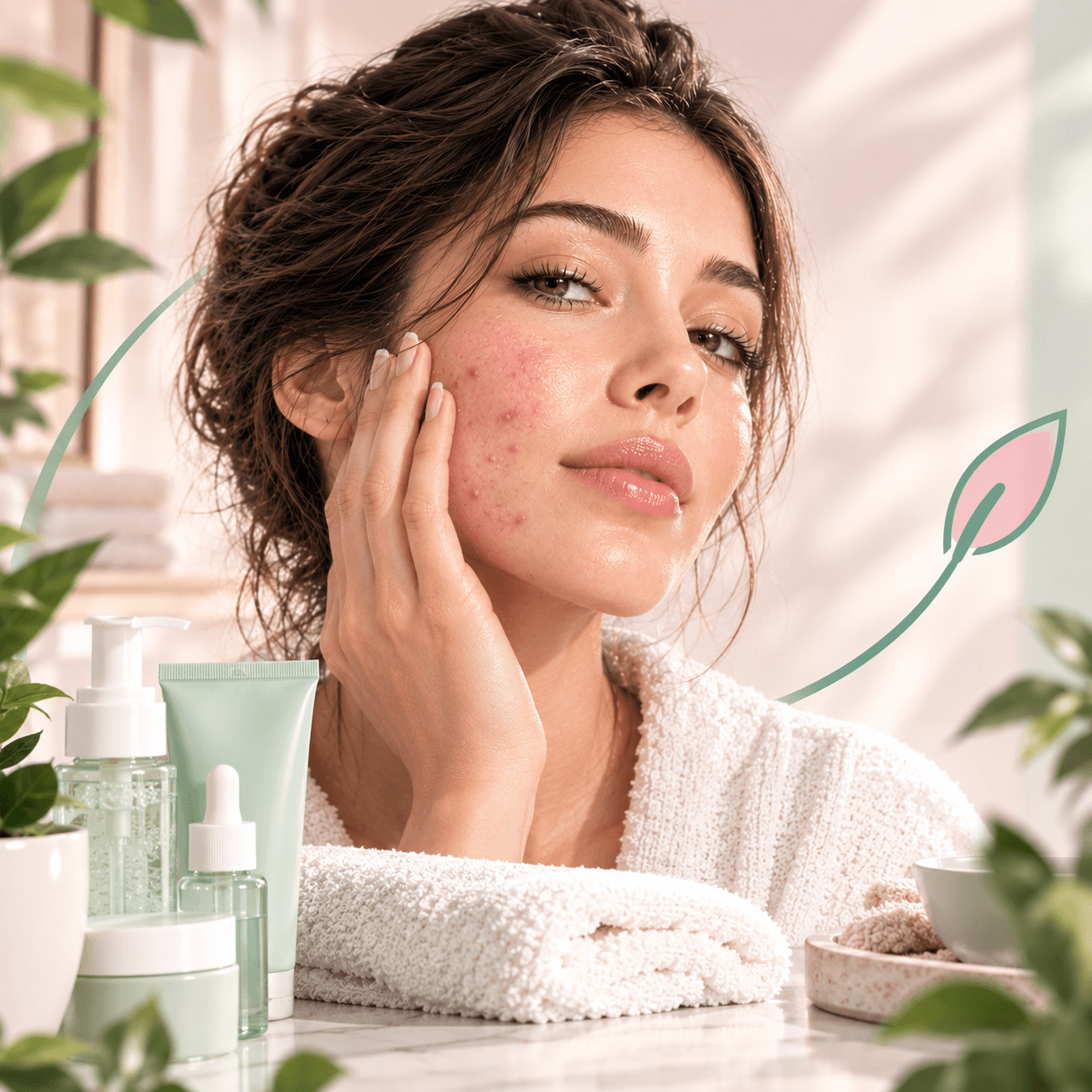
Spots, blackheads, shine: acne-prone skin needs few products, but the right ones, used consistently. Cleanse without stripping, treat with a proven active, still moisturise, and protect from the sun. Allow 6 to 12 weeks before judging the result.
Sun spots, marks left by acne, melasma: all of them get worse with sun and visible light. An anti-spot active in the evening only works if the morning sun protection is flawless. Visible results in 8 to 12 weeks.
Oily skin needs sun protection as much as any other: sun darkens acne marks and speeds up skin ageing. The key is a fluid, non-comedogenic, mattifying texture, applied in a sufficient amount. Under the Algerian sun, that means every day of the year.
Losing 50 to 100 hairs a day is normal. Heavier shedding often comes 2 to 3 months after a shock: exhaustion, dieting, childbirth, fever, stress, or simply autumn. It settles on its own, and the right care helps you through it. Shedding that persists, or thinning patches, need a medical opinion.
Dandruff most often comes from a yeast that naturally lives on the scalp and multiplies too much. It is not 'cured' once and for all but kept under control: a 3 to 4 week treatment phase with an anti-dandruff shampoo, then weekly maintenance.
Atopic skin has a barrier that holds water poorly: it feels tight, itches and flares up in red patches. Skincare does not replace medical treatment during a flare, but used properly every day it makes flares less frequent. Three steps: wash gently, moisturise generously, calm the itch.
Stinging, heat, redness at the slightest change in temperature: sensitive skin reacts more the more you ask of it. The rule is restraint: few products, fragrance-free, introduced one at a time, and a mineral sunscreen. Permanent redness with flushing deserves a medical opinion.
During pregnancy, skin changes: spots, melasma, dryness. Most simple skincare remains usable; a few actives should be set aside until breastfeeding ends, retinoids first. A short routine is enough, and your doctor or pharmacist remains the reference when in doubt.